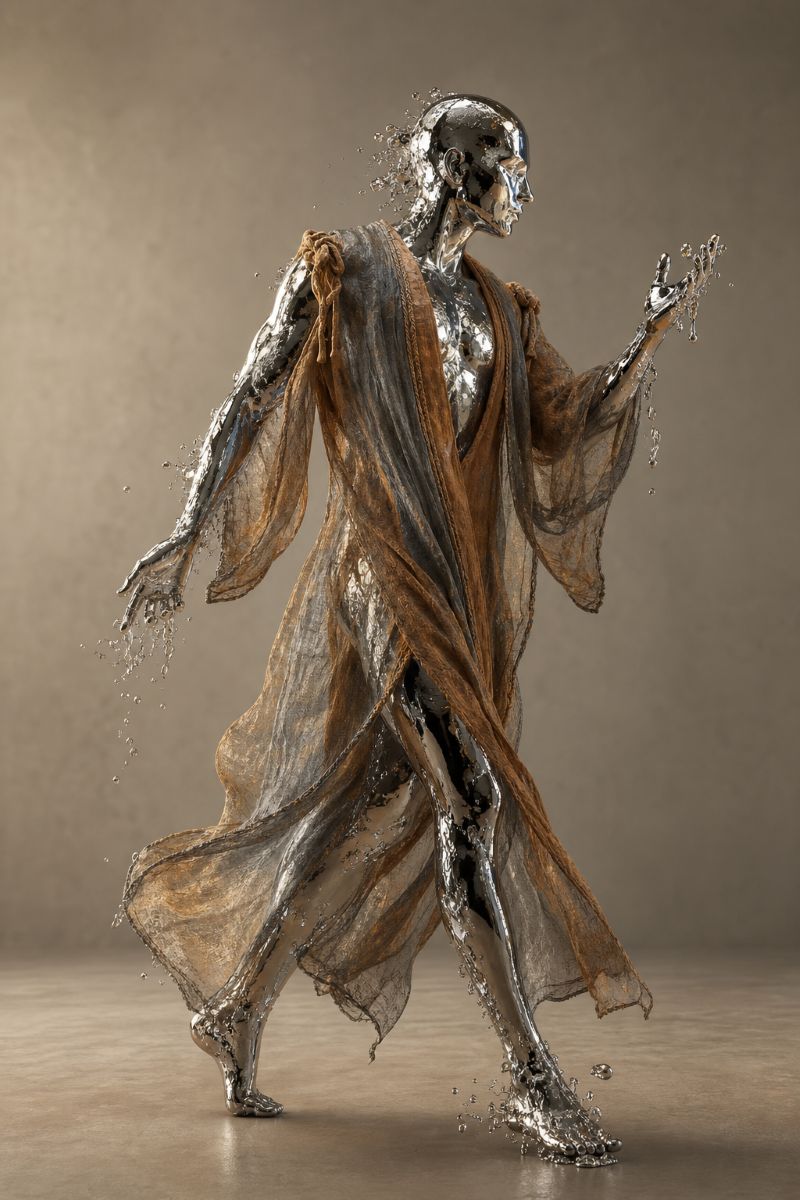
About the work
One act, aimed three ways.
Everything this studio makes is the same act: articulation. Taking something with no edges (a psyche, a bond, a chart) and building a reference point precise enough that you can finally see what was always there. Here is the smaller way in, and what that act becomes in each of the three systems.
The three names
All three begin the same way. Human Emergence Expression is the self alone. Human Emergence Reflected is the self seen back. Human Emergence In Relation is the self between. Only the last word changes, and the last word is the whole difference.
Shortened, they became HEE, HER, and HEIR, which was a convenience and nothing more. What it turned into was not planned. Read them aloud and you get he, her, and heir: the one who speaks, the one who is seen, the one who inherits.
The coincidence was noticed, not built. It has been kept because it happens to be true.
About One Aspect: the door
One Aspect is not a fourth room. It is the way in.
A chart contains several hundred contacts between its parts. One Aspect takes a single one of them, the contact carrying the most weight, and writes it out in full: what each of the two parts is, what happens where they meet, what that arrangement costs, and one question only the reader can answer. Around a thousand words, delivered within 72 hours.
It carries no acronym on purpose. The three systems below share a root because they are three positions of one person. This is a smaller thing than any of them, and naming it like a member of the family would suggest a fourth position that does not exist.
What it is for is proof. Reading one contact described accurately is the only honest way to find out whether a full assessment is worth what it costs, and it is a better test than any description of the method could be. One aspect, articulated.
About HEE: the self, alone
A birth chart is a notation system. Some people use psychology; some use astrology. Both write down the same thing: the particular shape a person came in.
Everyone carries the same instruments. What differs is which ones are loud.
Saturn is the one that draws lines. In some people he presides over the whole room, and every decision passes through him before it reaches anyone else. In others he barely speaks, and the lines never get drawn at all. Same figure, same function, opposite volume. Fourteen of those, arranged one way in you and another way in everyone else.
A HEE assessment maps the apparatus, not the essence: the machinery you filter through, not what you are behind it. Some of what it finds will not resolve, and it says so plainly; those configurations are usually the engine, not the damage. And it contains no instructions, because an assessment that tells you what to do has assumed it knows your life better than you do.
The full disclosure, the text every assessment opens with →
About HER: the self, seen back
HER is the only thing in the studio that is not a made object. It is a held session, live: you talk, and what you say is labeled, mirrored back, and met with calibrated questions until you are the one saying the thing. Your chart is not interpreted at you, and you are not explained to yourself. The work is yours; the room is simply held steady while you do it. Emotional midwifery, not oracle work.
Most people book it after an assessment, because reading an accurate account of your own apparatus alone is not the same as metabolising it. It is not therapy and not a substitute for it, and the session says so before it begins. There are deliberately few of these each week. What you say in the room stays in the room.
About HEIR: the self, in relation
If you know astrology, you know synastry: lay one chart over another, find where the planets touch, read the angles. HEIR is not that. It begins with function, not geometry: how does each of you receive love, how does each of you give it, and what would each of you go to war to protect. Three questions per person, asked in both directions, because how your love reaches them and how theirs reaches you are two different events, and usually one is going better than the other.
It does not score compatibility, and it will not tell you whether to stay. It maps the space between two people and hands the choice back to the two people it belongs to.
The full account, where HEIR departs from synastry, and why →